

The Most Dangerous Schwab Account Takeover Scams
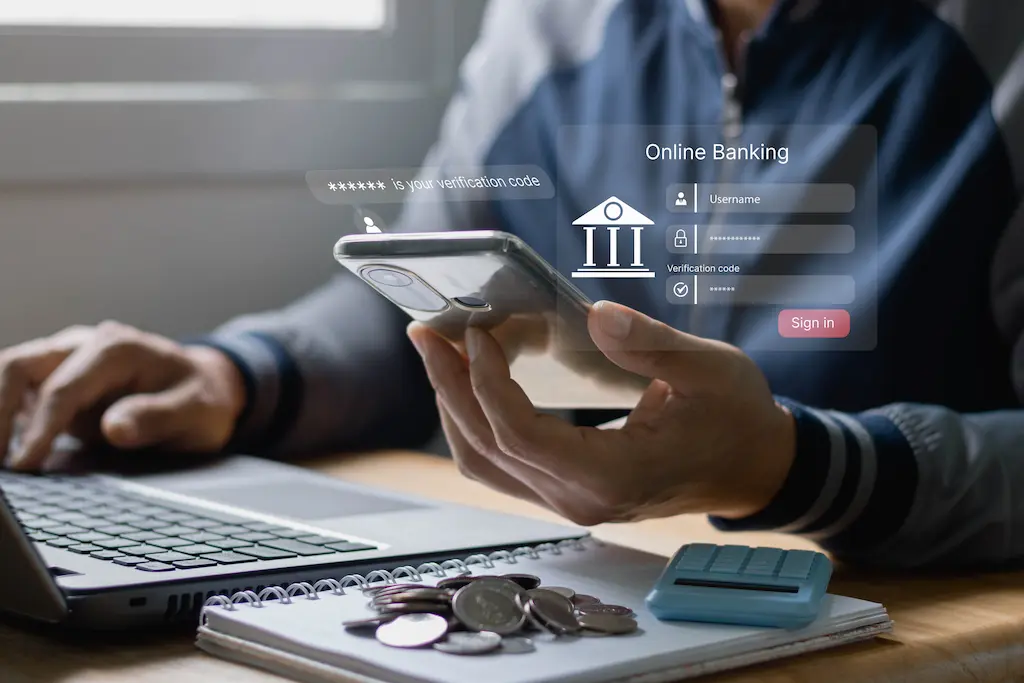
Charles Schwab customers have reported incidents involving unauthorized access to their brokerage and retirement accounts, followed by sudden liquidations and large outgoing wire transfers. These events are commonly described as Schwab account takeover scams, a form of brokerage account fraud in which bad actors gain control of an investment account and move funds without the customer’s prior knowledge or authorization.
What a Schwab Account Takeover Scam Is
A Schwab account takeover scam occurs when an unauthorized third party gains access to a customer’s brokerage account and uses that access to change login credentials, modify contact information, disable or alter multi-factor authentication, add new external bank accounts, liquidate securities, and initiate wire transfers.
These schemes are a type of investment account fraud, brokerage account hacking, wire transfer fraud, and financial impersonation scam. In many reported cases, once access is obtained, funds are moved quickly—sometimes within mere minutes or hours—after long-term holdings are sold.
Schwab Impersonation and Phishing Scams
One common form of Schwab-related fraud involves impersonation scams and phishing attacks.
In these schemes, individuals contact customers while falsely claiming to represent Schwab’s fraud or security department. Victims report being told:
“There is suspicious activity on your account.”
“We need to secure your brokerage account immediately.”
“A wire transfer is pending and must be verified.”
“Provide the security code we just sent to stop the transaction.”
The fraudster uses urgency and authority to obtain login credentials or one-time authentication codes. Once obtained, those credentials are used to access the brokerage account.
These scams fall under financial phishing fraud, brokerage impersonation fraud, and social engineering investment scams.
SIM Swap–Related Brokerage Fraud
Some Schwab account takeover cases involve what is known as SIM swap fraud.
In these schemes, a fraudster persuades a mobile carrier to transfer the victim’s phone number to a new SIM card controlled by the attacker. Once the number is transferred, authentication text messages and verification codes are redirected to the fraudster.
With control of the phone number, the attacker can reset brokerage passwords and complete multi-factor authentication challenges. This allows access to the Schwab account and the ability to initiate transactions without the participation, knowledge, or authorization of the true accountholder.
SIM swap attacks are a form of identity theft, telecom fraud, and brokerage account takeover fraud.
Credential Stuffing and Data-Driven Account Takeovers
Other Schwab account takeover incidents do not involve direct impersonation calls. Instead, they appear linked to compromised credentials.
In these scenarios, attackers may use email-password combinations exposed in data breaches, personal identifying information obtained from third-party data leaks, or automated login attempts across financial platforms. If credentials match, access can be obtained without interacting directly with the customer.
These incidents are often categorized as credential stuffing attacks, data breach exploitation, and online brokerage hacking schemes.
Unauthorized Liquidation and Wire Transfer Fraud
Once control of a Schwab account is established, the next stage typically involves rapid financial movement.
Victims report entire portfolios being liquidated, retirement accounts being sold off, new bank accounts controlled by scammers added as transfer destinations, and large wire transfers initiated to unfamiliar recipients. The liquidation process is often executed quickly, sometimes immediately after account access and control changes occur.
This phase of the scheme is typically described as unauthorized wire transfer fraud, brokerage liquidation fraud, and investment theft.
Data Exposure and Targeted Brokerage Fraud
In several reported incidents, victims state that fraudsters appeared to know accurate personal information about the victim — and sometimes their family members — before or during the scam. This has raised concerns about data-driven targeting in brokerage fraud schemes.
Information that may be used in such targeting includes full legal name, email address, phone number, account type, and partial identifying details. Access to such data can make impersonation more convincing and account access easier to obtain.
These situations often intersect with broader issues involving data breaches, identity theft, and financial account targeting.
Why Schwab Account Takeover Scams Are Considered Dangerous
Schwab brokerage accounts frequently hold valuable retirement savings, long-term investment portfolios, trust assets, and high-balance trading accounts. When an account takeover occurs, funds can be moved rapidly, and recovery becomes increasingly difficult once transfers are completed.
These schemes are particularly dangerous because they often occur without immediate detection, may involve multiple coordinated steps, and can drain substantial balances in a short timeframe.
Schwab account takeover scams represent a significant form of investment account fraud and brokerage-related financial loss.
Silver Miller Investigates Schwab Account Takeover Fraud
Silver Miller investigates claims involving Schwab account takeovers, brokerage hacking, unauthorized wire transfers, phishing-related investment fraud, and SIM swap–related brokerage losses.
The firm examines transaction records, account change histories, authentication methods, and institutional response timelines in cases involving significant brokerage account losses.
If you experienced unauthorized activity in your Schwab brokerage account, contact Silver Miller to discuss your situation confidentially.


